

For Indian travellers, the Maldives is a 2–4 hour flight with a free visa on arrival — genuinely one of the easiest international trips available. Direct services run from Delhi, Mumbai, Bengaluru, Chennai, Hyderabad, Kochi and Thiruvananthapuram into Velana International Airport (MLE), and you collect a 30-day stamp at the desk rather than applying in advance. But “the Maldives” is not one destination: it is 26 atolls split between private resort islands and real local-island communities, and picking the right one matters more here than in almost any other beach destination.
Western round-ups often assume a single overwater villa and a seaplane. Indian search intent is wider — some trips are a honeymoon villa week, others are a guesthouse on Maafushi that still reaches the same reefs. The split that actually decides the budget is resort island versus local island, not which atoll looks bluer in a photograph. The four hubs below cover a first trip from India: the gateway capital, the easiest budget island, the whale-shark atoll, and the UNESCO lagoon.
Quick Answer
The best places to visit in the Maldives are Malé (the gateway capital), Maafushi (the easiest budget local island), Ari Atoll (year-round whale sharks), and Baa Atoll (UNESCO biosphere and manta rays). First-time visitors from India typically pick one hub rather than island-hopping across all four.
Hover a pin on the map, then read the island that matches your trip. Each pin opens a focused guide.
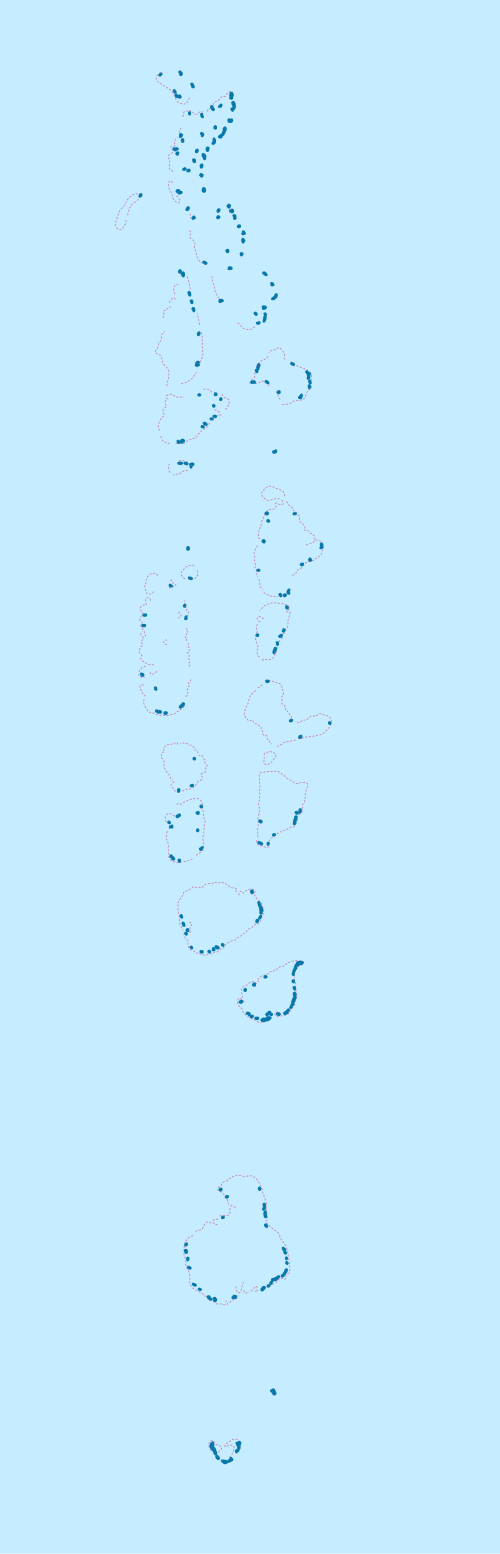


1. Malé — The Gateway
Every Maldives trip starts here. Velana sits on Hulhulé, a short causeway from the capital; the fish market, the Old Friday Mosque (Hukuru Miskiy), and the Sultan Park sit in a compact grid you can walk between connections. Most travellers spend a few hours or one night, not a full holiday — unless they are building a dedicated culture trip around Malé and Hulhumalé. Hulhumalé is the practical overnight if a seaplane to Baa or Ari leaves at first light and you would rather not gamble on a delayed international arrival.
Malé is not the lagoon holiday. It is hot, dense, and useful. Use it as the airport city, then take the speedboat or seaplane to the island you actually booked. See the full Malé Travel Guide.
2. Maafushi — The Budget Local Island
Maafushi is the Maldives’ most popular local island — guesthouses from about USD 40–120 a night, a public “bikini beach,” and the same reefs found at five-star resorts, at a fraction of the price. The public speedboat from Malé takes around 45–90 minutes depending on the boat; you do not need a seaplane. This is where most budget-conscious Indian travellers land, and it is still the cleanest answer to “maldives budget places for indian tourists” if you want sand, snorkelling, and a sandbank picnic without an all-inclusive meal plan.
Dress modestly off the designated tourist beach; alcohol is not sold in the village. That is the local-island contract, not a hidden extra. Maafushi is busy by Maldives standards — if you have already done it, look at Thulusdhoo or Fulidhoo rather than adding a second crowded guesthouse strip. See the full Maafushi Travel Guide.
3. Ari Atoll — Whale Shark Territory
Ari Atoll (Alifu) is the answer to which island you should visit for whale sharks. Sightings run year-round, particularly off Dhigurah in South Ari — one of the most reliable whale-shark encounters anywhere. The atoll mixes private resorts with local islands; Dhigurah is the budget snorkel base, while house-reef resorts sit on their own islands a short boat away.
Do not treat Ari as a day raid from Malé. The transfer is a domestic flight or a long speedboat; three nights in the atoll is the minimum that keeps the journey from eating the stay. If whale sharks are the trip, pick Dhigurah or a South Ari resort and stay put. See the full Ari Atoll Travel Guide.
4. Baa Atoll — UNESCO Biosphere & Honeymoon Villas
Baa Atoll is a UNESCO Biosphere Reserve, famous for Hanifaru Bay’s manta ray gatherings (roughly May–November) and some of the Maldives’ most photographed honeymoon overwater villas. The lagoon is a seaplane ride from Malé — budget the transfer as part of the stay, not a side trip. Five nights is the comfortable first visit so the flight in and out is not half the week.
If the overwater villa is the holiday, Baa (or a close North Malé resort) beats hopping. Hanifaru is seasonal and regulated; go for the biosphere and the house reef, and treat mantas as a bonus in the southwest-monsoon months. See the full Baa Atoll Travel Guide.
Resort Islands vs Local Islands: The Decision That Matters Most
Unlike most beach destinations, the biggest choice in the Maldives is not which island — it is which kind of island. That is what separates this list from generic global “places to visit in Maldives” round-ups: Indian travellers sit on a wider budget range than the typical Western villa search, and mixing the two models badly is the usual first-timer mistake.
Resort islands (Soneva Jani, Gili Lankanfushi, Cinnamon Dhonveli, and hundreds more) are private, one-island-one-hotel bubbles: alcohol served, bikinis anywhere, all-inclusive meal plans. Budgets start around ₹2,50,000 for a mid-range week and run well past ₹7,00,000 for luxury villas, once flights from India and seaplane transfers are in.
Local islands (Maafushi, Dhigurah, Thulusdhoo, Fulidhoo) opened to independent tourism in 2009 — guesthouses, modest dress off the designated bikini beach, no alcohol in the village. A full week from India including flights runs roughly ₹90,000–₹1,20,000 if you keep to public speedboats and one atoll.
Neither is “better” — they are genuinely different trips. The expensive error is a cheap guesthouse plus an expensive inter-atoll seaplane, or two resort islands in five nights. Pick one model, one hub, and spend the transfer once.
Beyond the Four Hubs
North Malé Atoll’s resorts are the shortest speedboat transfer from the airport — useful if you want the villa photograph without a seaplane. Hulhumalé is the practical overnight when a seaplane connection needs an early-morning departure. Local islands beyond Maafushi — Thulusdhoo for surfing, Fulidhoo for a quieter guesthouse strip — suit travellers who have already done Maafushi and want fewer rooms on the beach. None of these replace the four hubs on a first five-night trip unless surf, a bio beach, or a 20-minute transfer is the reason you came.
How to Choose for Your Trip
Five nights: one resort in North Malé or Baa, or Maafushi only. Seven days: Maafushi plus Dhigurah if you came for reefs on a budget, or one villa week without island-hopping. Ten days can add a Malé culture night or a quieter local island — not two seaplane atolls. See Things to Do in the Maldives for what each type of island actually offers day to day, and Best Time to Visit the Maldives for planning around dry season, manta season, and monsoon discounts.
Frequently Asked Questions
Maafushi is the best choice for first-time budget travellers from India; Ari Atoll (specifically Dhigurah) for whale sharks; Baa Atoll for honeymoon overwater villas and manta rays; and a North Malé resort for the shortest transfer time from the airport.
Yes — Indian passport holders receive a free 30-day visa on arrival at Velana International Airport. You need a passport valid for at least six months, a confirmed return ticket, and a confirmed accommodation booking; there is no advance application or fee.
Resort islands are private, all-inclusive “one island, one hotel” properties where alcohol and bikinis are permitted anywhere. Local islands are real Maldivian communities with guesthouses, budget pricing, and local dress and alcohol rules outside the designated tourist beach.
Dhigurah, in South Ari Atoll, offers the most reliable year-round whale shark sightings in the Maldives.
A minimum of three nights at a resort keeps the transfer from dominating the trip; five to seven days is the comfortable range for a first visit from India.
Maafushi is the Maldives’ most established budget destination, with guesthouse rooms from roughly USD 40–120/night and full week trips from India costing around ₹90,000–₹1,20,000 including flights.